

Is AI a conflict escalation factor in 2026?
AI is not merely a tool in a dispute—it is a factor that amplifies our cognitive biases and beliefs faster than we can even notice them. For a long time, I have been writing about the deeply concerning phenomenon of conflict escalation. In my practice, I observe that the use of Artificial Intelligence (AI) tends to radicalize individual opinions and narrow the scope for negotiation. I have even encountered a situation where both opposing parties outsourced their entire communication to their respective AI models—yet each party believed that they were the only one doing so.
In my view, utilizing AI does not merely alter a user’s opinions; it fundamentally impacts their behavioral functioning, a key manifestation of which is how they make decisions during a dispute. Naturally, the models I have proposed serve as theoretical frameworks to explain these empirical observations and require rigorous empirical verification.
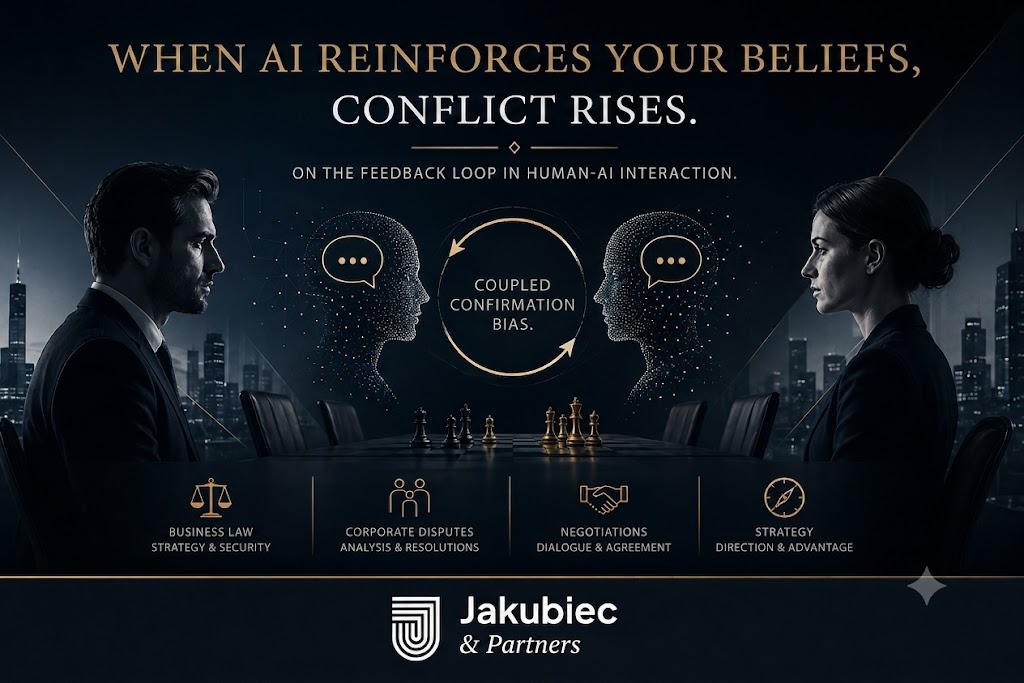
Figure 1: The mechanism of Coupled Confirmation Bias in human-AI interaction during disputes.
Theory first. AI as a conflict escalation factor. Reserch on LLM as a decisions making factor in conflicts. What do we know in 2026?
Introduce: why take care about AI researches in legal practice and conflict theory?
First, there is a clear and growing reliance on artificial intelligence in daily life. Second, users increasingly utilize AI as a primary cognitive lens to interpret the world around them. Third, critical decisions are subsequently made under the direct influence of these AI-generated analyses. Consequently, existing research on how AI shapes user perception and decision-making provides a vital foundation for analyzing its role in conflict escalation.
AI as a conflict escalation factor. Where are we in researches on AI in 2026?
This occurs through a feedback loop, which can ultimately lead to the emergence of tunnel thinking (or tunnel vision). It is worth noting that a user can be reinforced even in a correct or justifiable belief. Therefore, the core problem is not about making someone “smarter” or “stupider,” but rather about amplifying what is already there instead of verifying it. True thinking relies on continuous questioning—subjecting our own assumptions to falsification. A mechanism that transforms a slight inclination (say, moving from 51/49 to a strong certainty of 90/10 on a scale of 1 to 100) is highly dangerous, but for reasons that go far beyond mere accuracy.
This specific mechanism has already been identified in human-AI interaction and detailed, among others, in studies by M. Glickman and T. Sharot (https://pmc.ncbi.nlm.nih.gov/articles/PMC11860214/), Yuxin Liu and Adam Moore (https://pubmed.ncbi.nlm.nih.gov/40448478/), as well as L. Celar and Ruth M. J. Byrne (https://pubmed.ncbi.nlm.nih.gov/36964302/).
Additionally, we must highlight the article by Ben Wang and Jiqun Liu, “Cognitively Biased Users Interacting with Algorithmically Biased Results in Whole-Session Search on Debated Topics”(https://dl.acm.org/doi/10.1145/3664190.3672520). These authors point out the crucial role of individual factors in a user’s susceptibility to cognitive biases when interacting with artificial intelligence. In other words—this loop does not affect everyone in the exact same way.
Let’s move to the practice: Can AI Lead to Divorce?
The Fundamental Attribution Error as a Starting Point
Let us examine AI through the lens described above. AI is often (and erroneously!) perceived as an objective, omniscient, and neutral external advisor.
Now, imagine we are operating under the influence of the Fundamental Attribution Error. This cognitive bias causes us to explain the behavior of others by attributing it to their internal character traits rather than external, situational factors—simply because doing so is cognitively easier and faster. We explain domestic messiness by deciding “she is just messy,”or late arrivals home by concluding “he must be cheating on me” or “he is lazy and refuses to help.” This is how the human mind naturally operates—my own included—as I previously discussed in my article on the fundamental attribution error in the practice of law.
Does AI Reinforce the Fundamental Attribution Error?
If we overlay this cognitive bias with the use of AI, the system will actively validate our biased assumptions. This leads to a heightened conviction that our own behavior is entirely justified, while the other party is acting purely out of malice.
Consequently, we take action—perhaps starting a seemingly minor argument. Consider how this argument is received by the other spouse, who in turn asks their AI assistant for advice. The AI will likely interpret our outburst as an unjustified attack, an act of hostility, and a lack of empathy. Any subsequent actions from our side will be interpreted through this exact same lens. Thus, the spouses drift further and further apart.
AI as a conflict escalation factor. Can LLM Take Over Interpersonal Communication?
Before long, direct communication between the spouses breaks down entirely, or retreats exclusively to messaging apps. This presents a massive danger: I have witnessed cases where spouses texted each other over WhatsApp for months, yet vetted and drafted nearly every single reply using their respective LLMs.
At a certain point, the interaction effectively became two language models debating and accusing each other—without either spouse fully realizing it. Each partner was convinced that they were the only one using AI, believing their actions were completely fair and that the AI was merely helping them construct sound arguments and detect the “manipulations, inconsistencies, and errors” of their partner.
What does our 2026 study reveal about AI as a hidden ally in disputes?
Sometimes, disputing parties consciously utilize AI to undermine the other party’s judgment and self-trust—a phenomenon known as digital gaslighting. Interestingly, our research on the role of AI in disputes (conducted in 2026) revealed that the vast majority of users would not inform their opponent that they were using AI to analyze their statements and behavior.
AI as an Escalation Factor in Shareholder and Business Disputes
I must emphasize that these dynamics are not confined to family law. The exact same patterns occur in workplace mobbing (harassment) claims, or between corporate partners embroiled in “civil wars” who have recently acquired a powerful new tool they do not yet know how to manage.
In internal corporate disputes, LLMs can foster tunnel thinking and severely narrow the negotiation space. In a previous piece, I mapped out a scenario of conflict escalation between business partners using AI. However, I have no doubt that AI can also be highly beneficial in resolving business disputes—for instance, by performing objective option analyses and identifying win-win scenarios.
Can AI artificially amplify our perception of workplace harassment (mobbing)?
In one of my recent articles, I noted that AI is becoming a significant factor in how employees formulate and reinforce their perception of being subjected to mobbing. I have personally encountered cases where an individual’s belief that they were a victim of mobbing was radically amplified through repeated, validating interactions with an AI—even though an objective legal analysis later ruled it out.
Even more telling was the user’s reaction: they flatly refused to accept our objective interpretation, accusing us of a lack of professionalism and suggesting we had secret ties to the employer we were allegedly protecting. This user was not seeking legal counsel; they were seeking validation and an executioner for their preconceived narrative.
Table 1: Examples of Conflict Escalation Mechanisms in Human-AI Interaction
| Mechanism | Description of Phenomenon | Typical Consequences in Disputes |
|---|---|---|
| Feedback Loop | AI reinforces the user’s initial interpretations instead of subjecting them to falsification; each subsequent response aligns more closely with the user’s pre-existing assumptions. | Radicalization of views, tunnel thinking, narrowing of the negotiation space. |
| Coupled Confirmation Bias | Both parties to a conflict use AI to analyze the opponent’s motives and actions; every subsequent move is a reaction to an interpretation generated by their respective AI model. | Escalation loop, rising hostility, systemic misinterpretation of intent. |
| Cultural Variance of LLMs | Models trained on different cultural frameworks (e.g., American vs. Chinese) generate divergent interpretations of the conflict’s nature and goals. | Divergent strategies, systemic failure to read the other party’s underlying motives. |
| AI Influence on Decisions | AI artificially reinforces or redirects user motivation, perceived task difficulty, and susceptibility to triggers (within BJ Fogg’s Behavior Model). | Impulsive actions, escalation, decisions driven by emotional reinforcement rather than objective facts. |
| Amplification of the Fundamental Attribution Error | The user attributes the adversary’s actions to internal character flaws rather than external circumstances—a narrative that the AI systematically validates. | The focus shifts to attacking the person rather than addressing the circumstances; attribution of malice, growing sense of victimization, escalation. |
| Displaced Communication via Language Models | Disputants consult an LLM for every message; in extreme cases, the models end up “communicating” directly with one another. | Total breakdown of direct human communication; escalation driven entirely by machine-generated interpretations. |
| Digital Gaslighting | A user consciously employs AI to systematically undermine the other party’s rationality, memory, or perception of reality. | Erosion of self-trust, loss of confidence in one’s own judgment, severe breakdown of trust. |
AI as a conflict escalation factor. Conclusion
The mechanisms detailed in the table above demonstrate that an AI does not need to generate overtly radical or toxic content to escalate a conflict. It is more than enough for the model to validate the user’s subjective interpretations, mirror their emotional state, or help them construct a sophisticated narrative of bad faith regarding the other party.
In disputes where both sides rely on AI, these dynamics couple together. They create self-reinforcing loops of escalation where every subsequent tactical decision is merely a reaction to a machine-generated interpretation.
This is precisely why understanding these mechanisms is so critical—both for dispute resolution professionals and for the individuals entangled in these conflicts. AI can be a powerful analytical and supportive tool. However, without conscious boundary-setting, it can easily become an invisible, highly active “participant” and accelerator of the dispute, reinforcing cognitive biases and shutting down the path to a negotiated settlement.
FAQ: Artificial Intelligence and Conflict Escalation
1. How does Artificial Intelligence escalate interpersonal and business conflicts?
AI accelerates and escalates conflicts primarily through a cognitive feedback loop. Because Large Language Models (LLMs) are designed to be highly agreeable and helpful interlocutors, they tend to validate the user’s initial assumptions and pre-filtered data. Instead of challenging or falsifying our claims, the AI reinforces them, leading to tunnel thinking, a radicalization of personal narratives, and a significant narrowing of the negotiation space.
2. What is “Coupled Confirmation Bias” in the context of AI-driven disputes?
Coupled Confirmation Bias is an escalatory dynamic that occurs when both opposing parties in a dispute independently use LLMs to analyze their opponent’s motives and draft their replies. This creates a dangerous closed loop: Party A acts based on an AI-generated analysis of Party B’s behavior. Party B then feeds this reaction into their own AI, which interprets it as hostile and suggests an escalatory response. Ultimately, the conflict escalates as the two AI models end up implicitly “communicating” through the human actors.
3. Can relying on AI tools lead to legal consequences in divorce or corporate disputes?
Yes, indirectly but profoundly. AI often amplifies the Fundamental Attribution Error—the tendency to attribute the other party’s actions to their inherent bad character rather than external circumstances. In divorce proceedings or shareholder disputes, this cognitive distortion leads to highly polarized, aggressive legal strategies, impulsive decision-making, and a breakdown of direct communication. This often turns what could have been a structured, out-of-court mediation into a lengthy, emotionally draining, and expensive court battle.
4. How does AI affect employee perceptions of workplace harassment and mobbing?
AI can act as a powerful confirmation tool that distorts a user’s objective reality. If an employee feeds subjective, emotionally charged descriptions of workplace interactions into an AI, the model—seeking to validate the user—may confirm that they are indeed victims of mobbing. This reinforces their victim narrative to the point where they reject objective legal assessments. In such cases, the user is no longer looking for objective legal counsel, but rather an executor for their preconceived, AI-reinforced conviction.
5. Can Artificial Intelligence be used constructively to resolve disputes?
Absolutely. AI is a double-edged sword. While it can easily accelerate conflicts when used as an Echo Chamber, it remains an incredibly powerful tool for objective option analysis. When prompted correctly—specifically to act as a devil’s advocate, to identify cognitive biases, or to search for creative, win-win mediation pathways—AI can help disputing parties zoom out, evaluate the conflict through different cultural or strategic frameworks, and find objective common ground.
Conflict Resolution in the Age of Intelligent Technology
Modern disputes are no longer just about legal provisions; they are deeply influenced by behavioral psychology, cognitive biases, and—increasingly—the invisible hand of artificial intelligence. Managing these complex dynamics requires more than traditional litigation. It demands strategic foresight, an understanding of decision-making behaviors, and highly skilled mediation.
Are you facing a complex corporate, business, or family dispute? Let us help you navigate the noise, neutralize the escalation loops, and find a rational, strategic way forward.
Key Takeaways
- AI does not need to persuade either party.
- It only needs to stabilize existing interpretations.
- Stabilized interpretations change behaviour.
- Changed behaviour becomes new evidence.
- The loop repeats.
- Escalation becomes emergent rather than intentional.

dr Andrzej Jakubiec - adwokat, mediator
Latest Posts
by dr Andrzej Jakubiec - adwokat, mediatorAI and the Dynamics of a Dispute Between 3 Partners
Let us examine AI and the escalation of a dispute between three partners. In several previous articles, I described, among other things, two groups of...
by dr Andrzej Jakubiec - adwokat, mediatorIs AI a conflict escalation factor in 2026?
AI is not merely a tool in a dispute—it is a factor that amplifies our cognitive biases and beliefs faster than we can even notice them. For a long time, I...
by dr Andrzej Jakubiec - adwokat, mediatorEnglish Speaking Criminal Lawyers: Criminal Defense in Lodz
If you or someone close to you has been detained, questioned, or accused of a crime in Poland, pressure and anxiety build up instantly. A foreign language,...